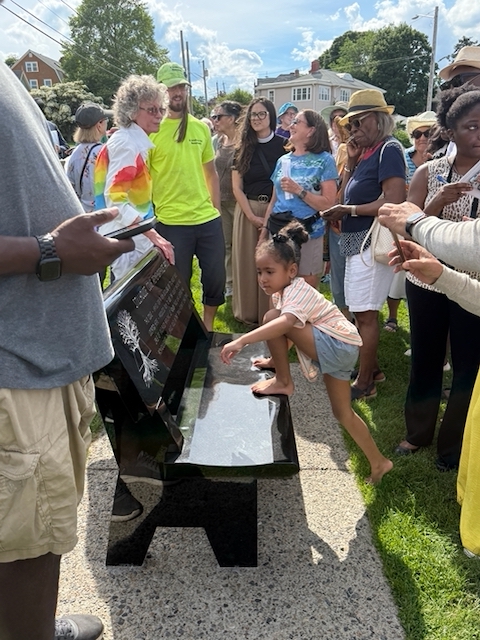
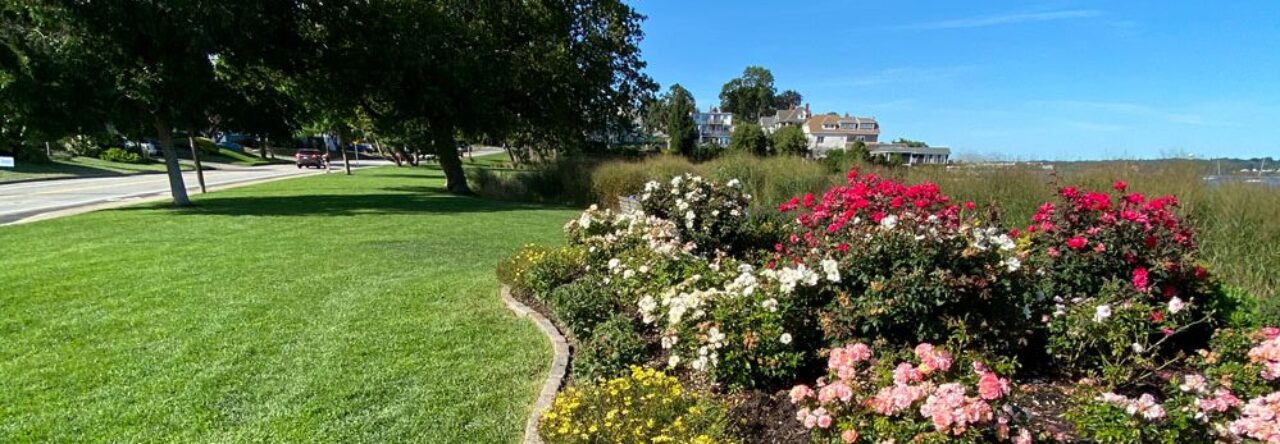
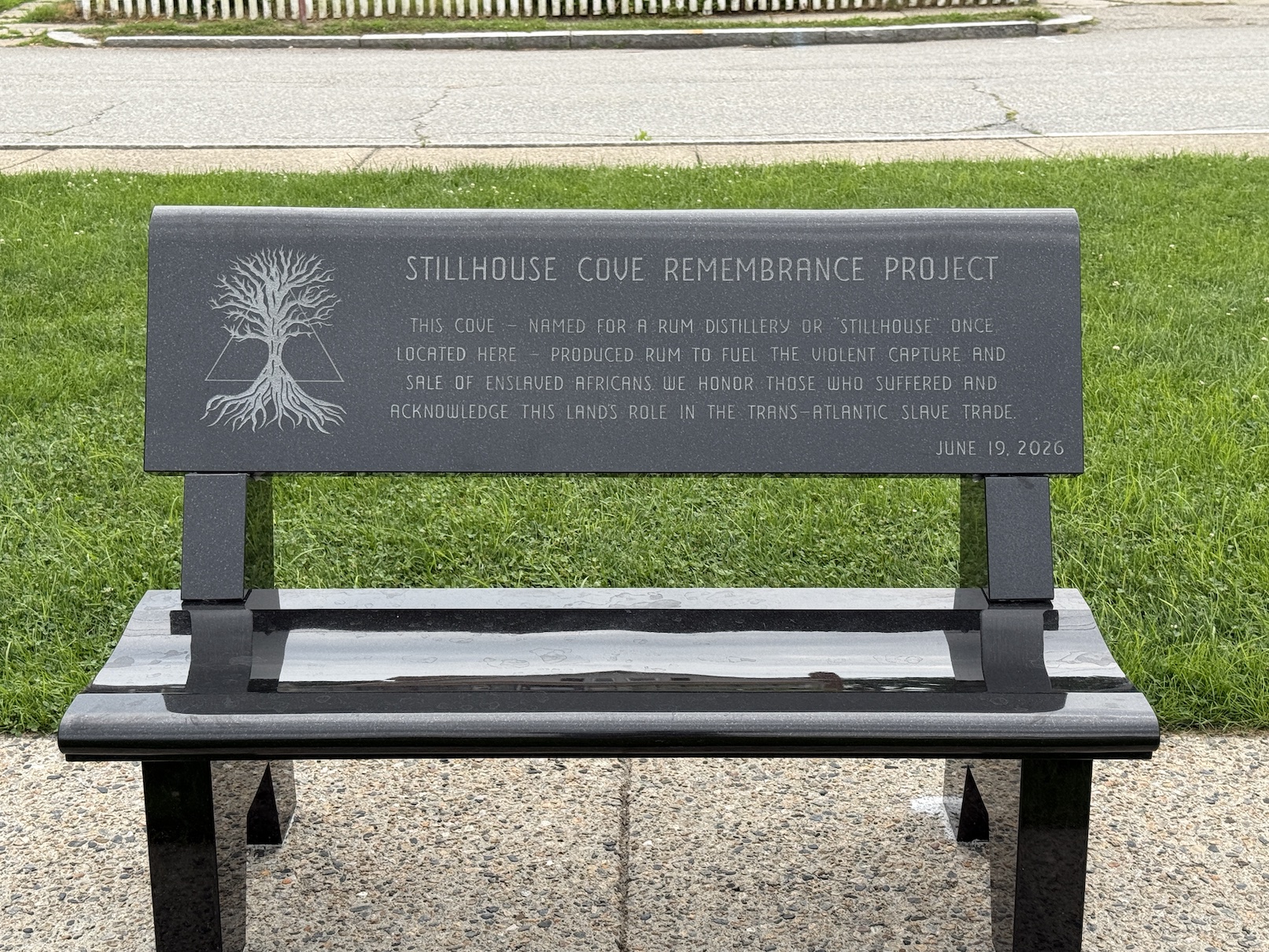
Earlier this year, at a neighborhood EWPA presentation, a participant asked about the historic location of the “stillhouse” on the Cove. Barbara Rubine replied that it was approximately where the Ocean Avenue roundabout now stands. “I wish it was still there,” the individual joked. Now a black marble bench reminds us of the terrible role played by that stillhouse and many others up and down the shores of Narragansett Bay in the 18th century. Those distilleries produced rum from molasses grown on Caribbean plantations where the average lifespan of slaves was only seven to nine years after their arrival. The rum produced along the shore of our beautiful cove was then loaded into barrels manufactured in Pawtuxet village and placed on ships that embarked for West Africa to be exchanged for more slaves.
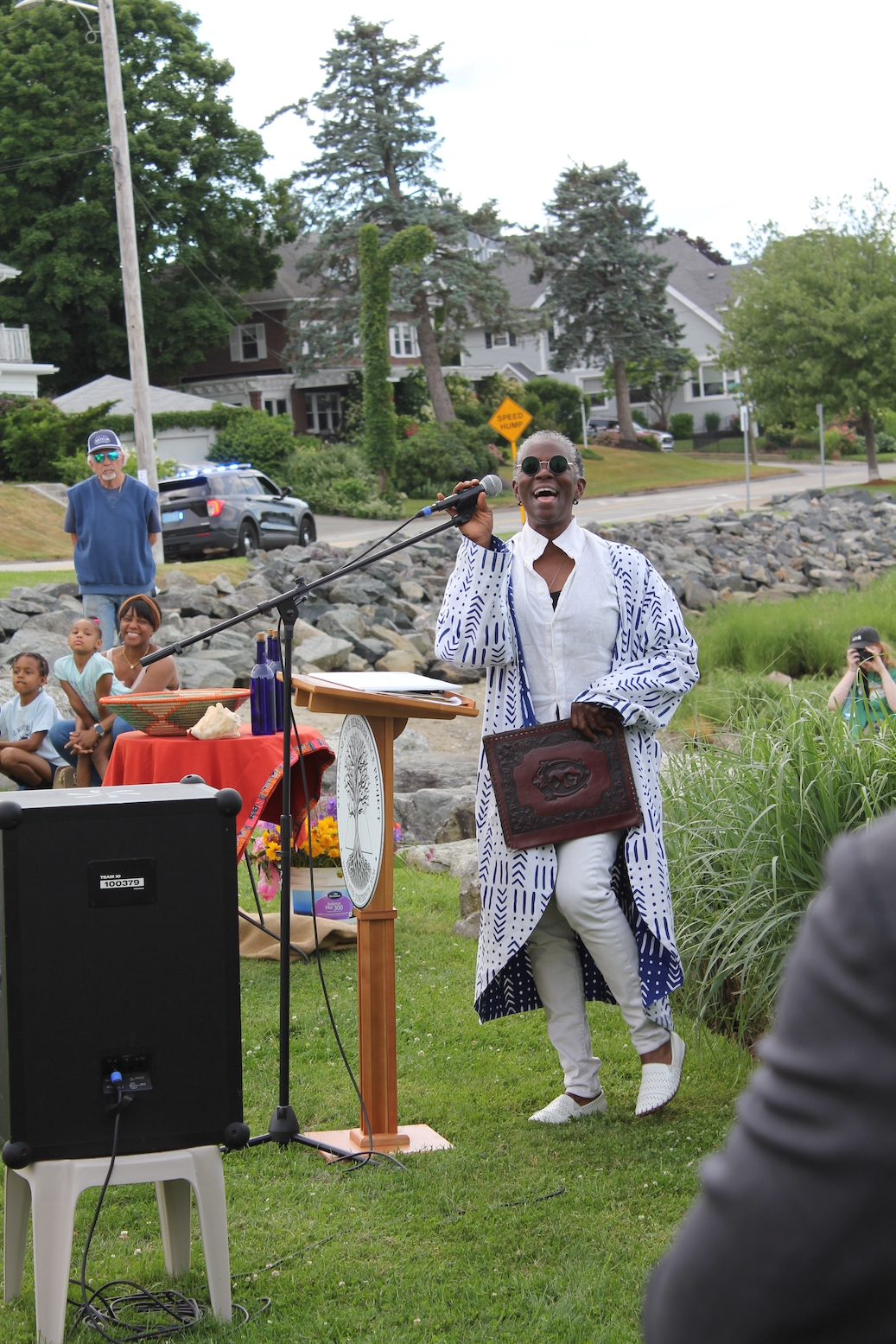
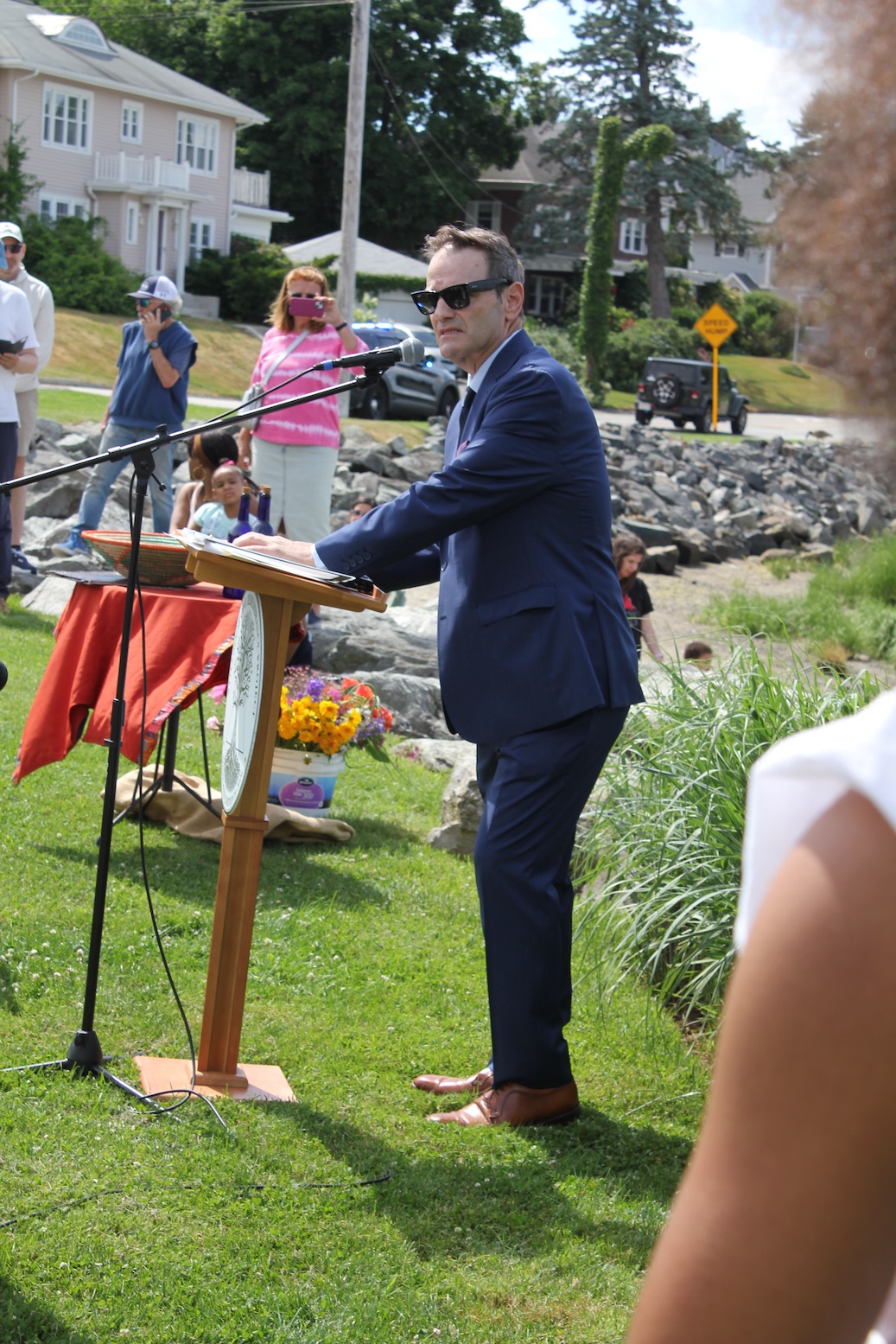
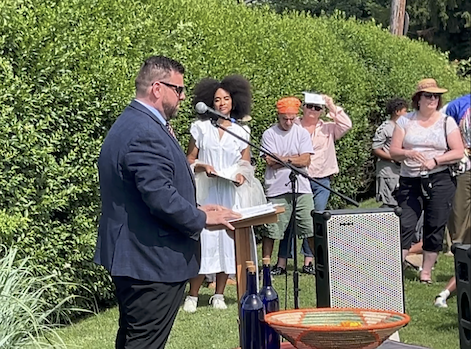
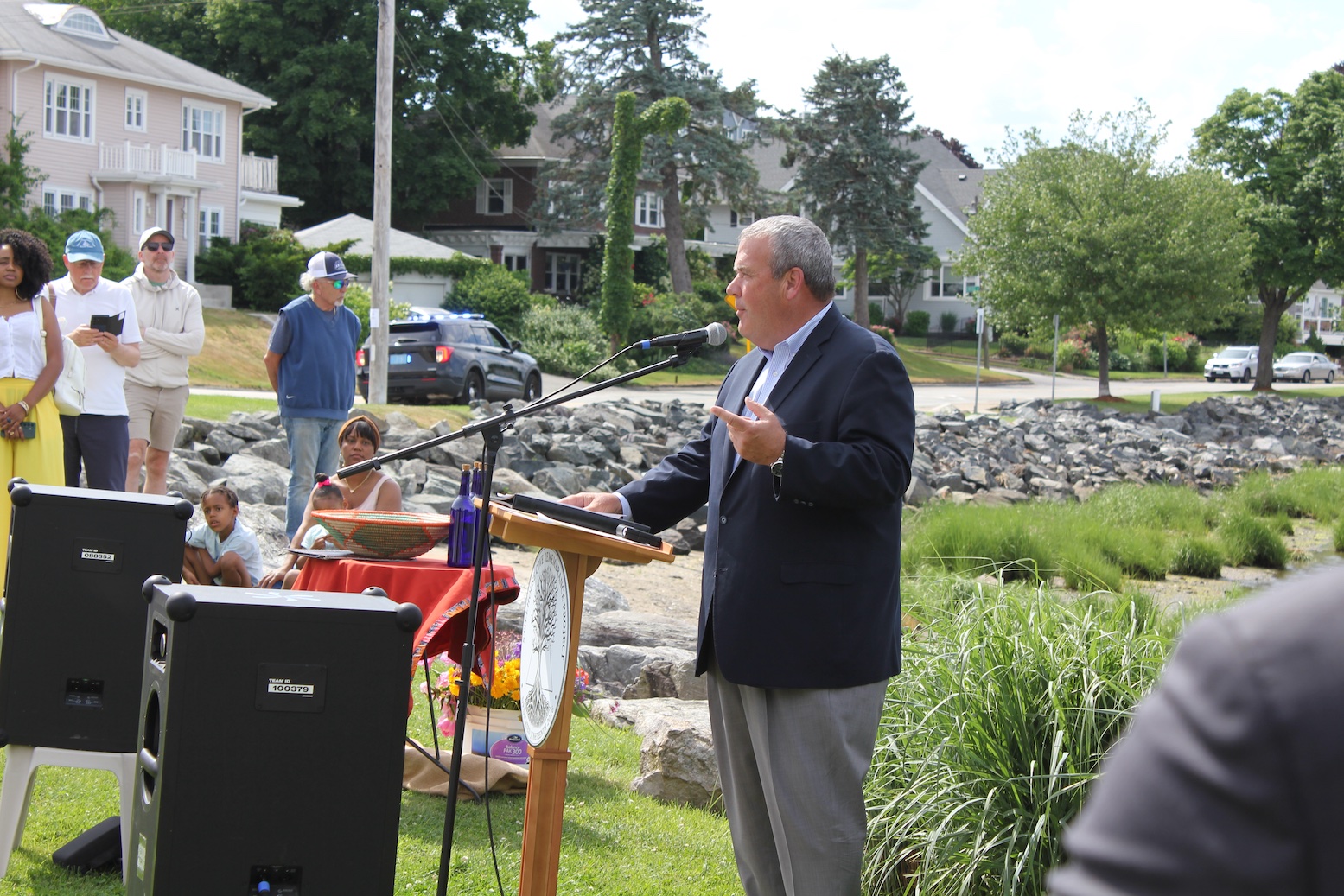
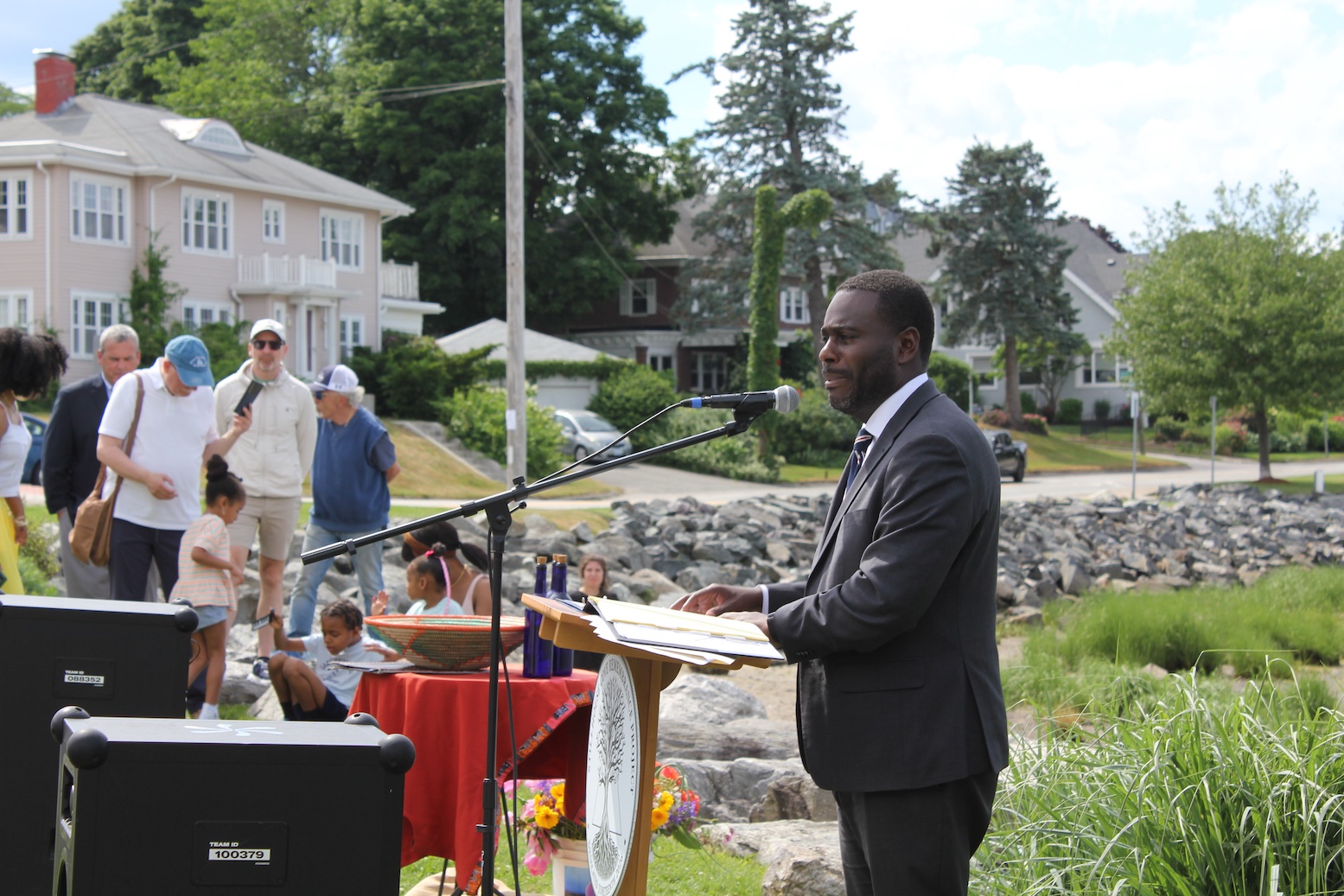
In other parts of the country, Rhode Island’s prominent role in the Atlantic Triangle Slave Trade is well recognized and documented, but here we have been reluctant to face the truth. At the June 19th unveiling, speaker after speaker pointed out the terrible irony of the sinking of the Gaspee in 1792. We celebrate it each year as a first strike for American freedom, but ignore the fact that its most prominent leaders were slave traders.
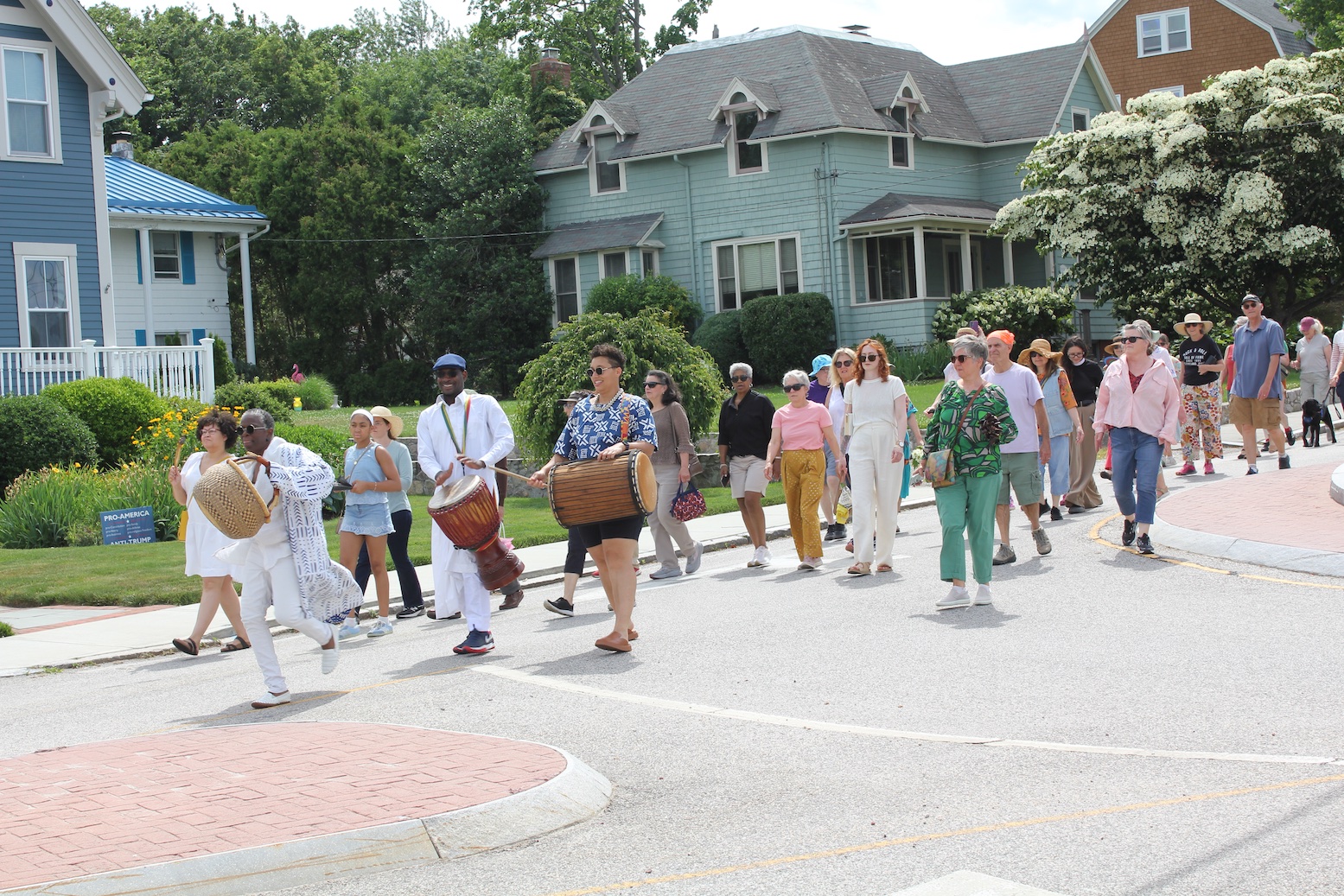
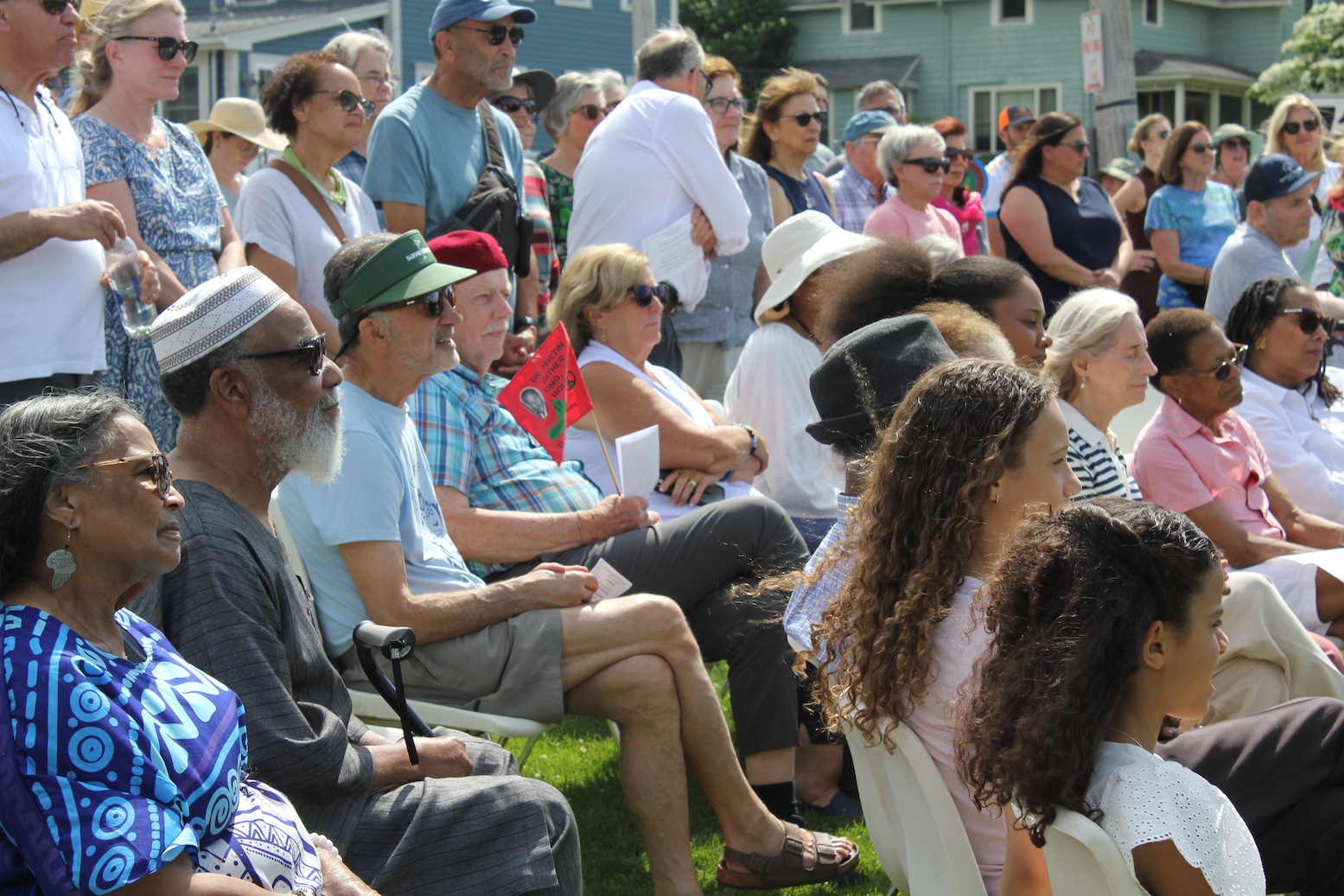
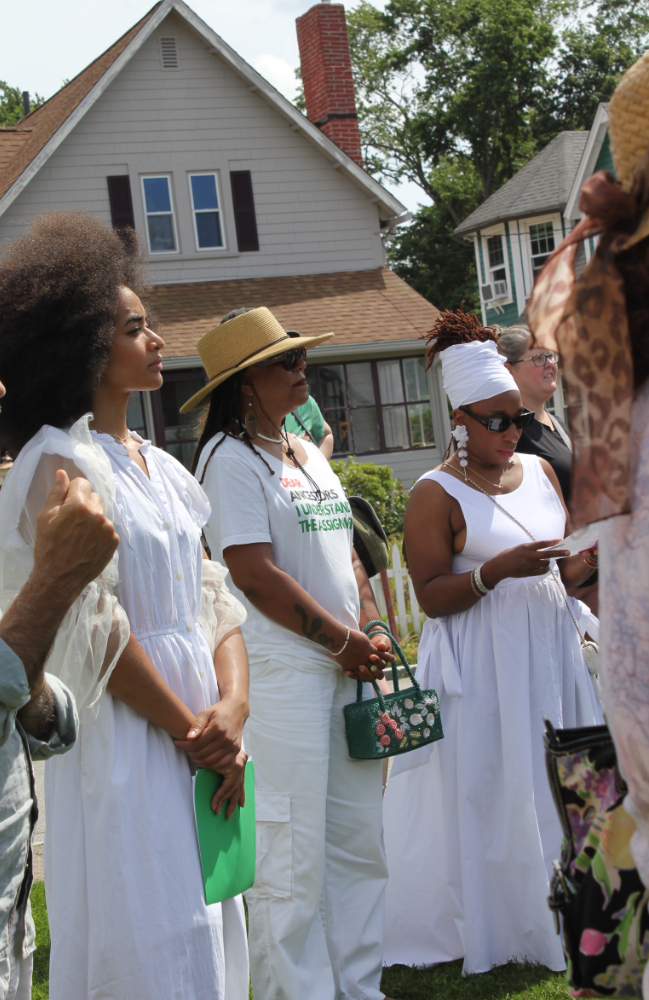
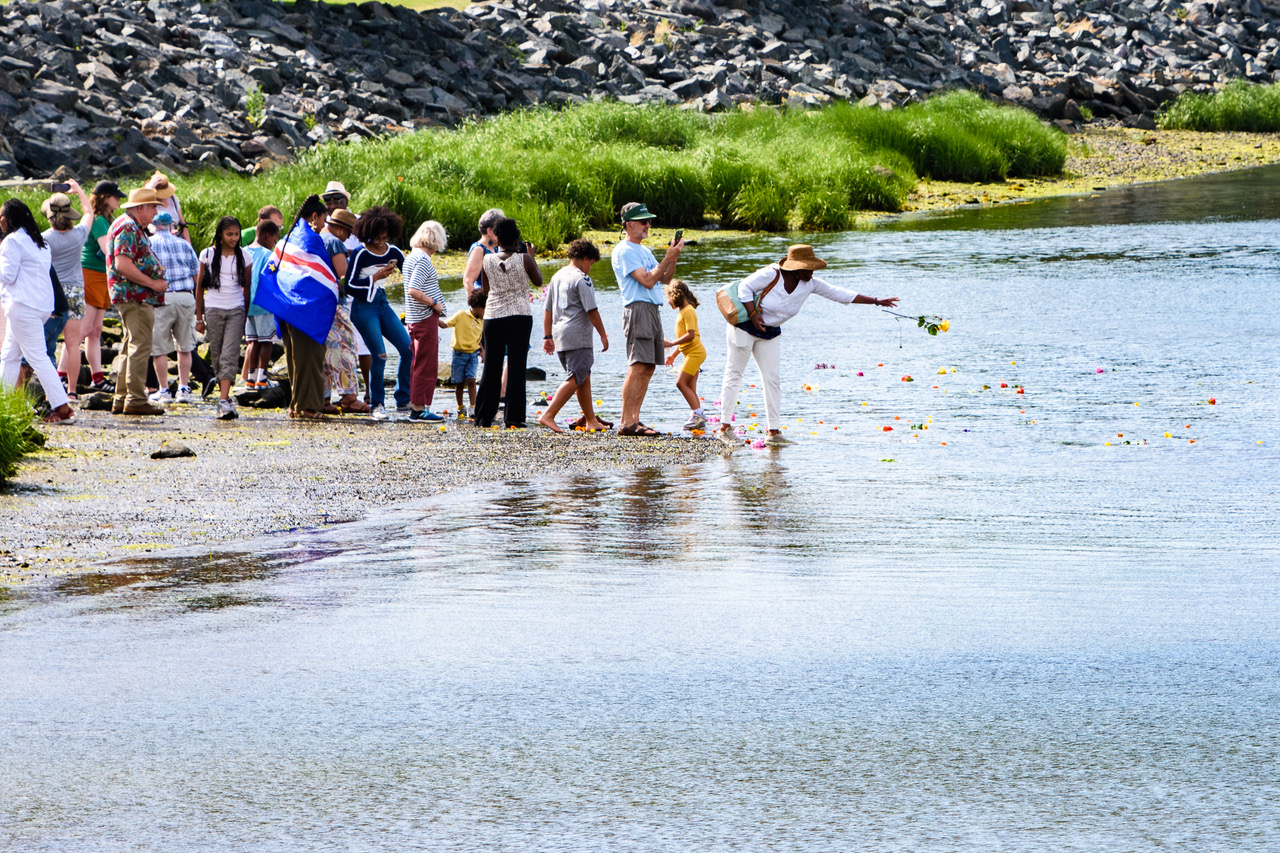
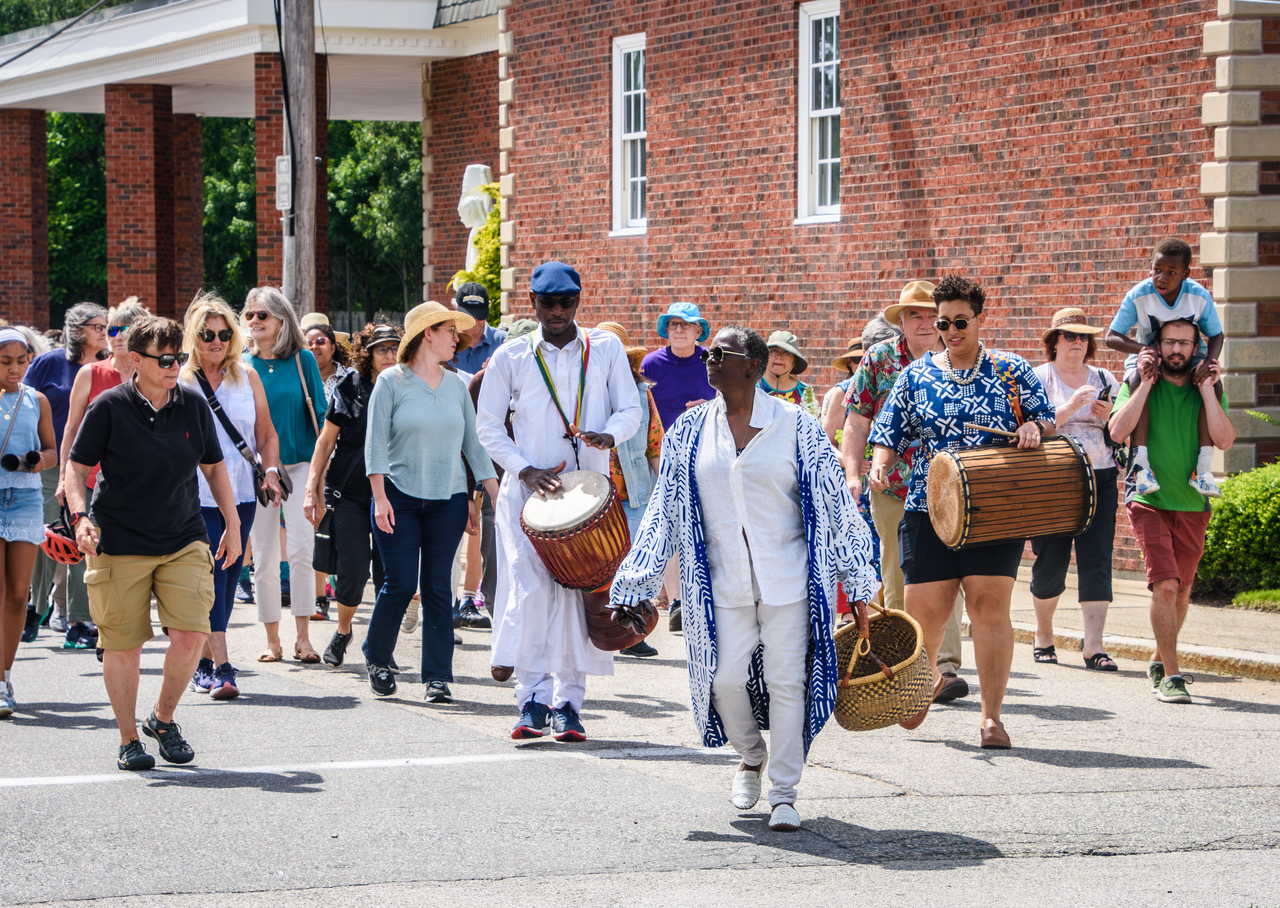
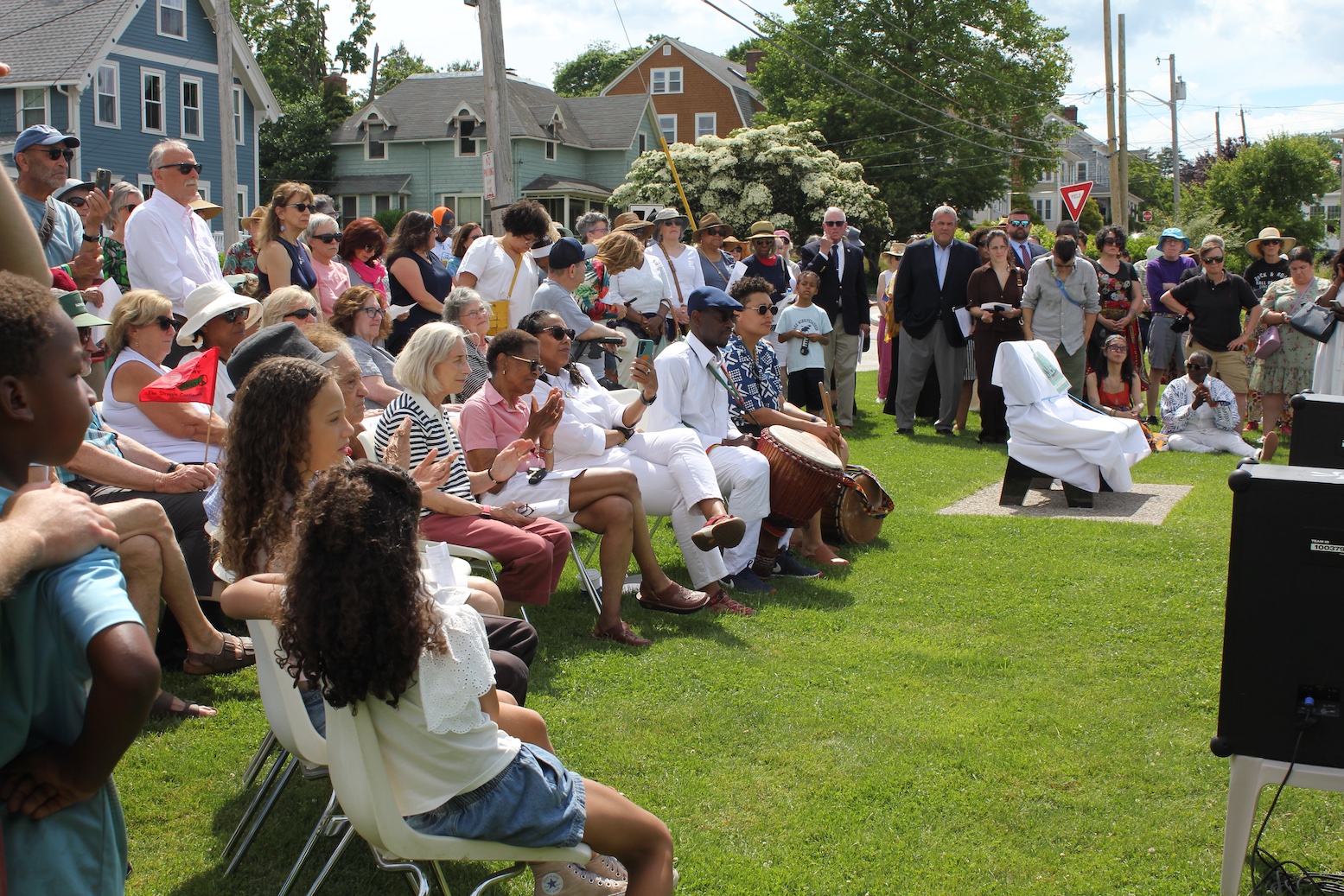
For a number of years, a coalition of academics, activists, and neighbors fought for a local recognition of our complex historical heritage. The Stillhouse Cove Remembrance Project (SCRP) worked with the Edgewood Waterfront Preservation Association (EWPA) and the City of Cranston to make it happen. On Juneteenth, 2026 a procession took place from Broad Street down to Stillhouse Cove where a large number of people gathered for the unveiling of the remembrance bench designed by Jheneire Loreus. A commitment was made to bring this lesson to our schools and to ensure that future generations learn from it.
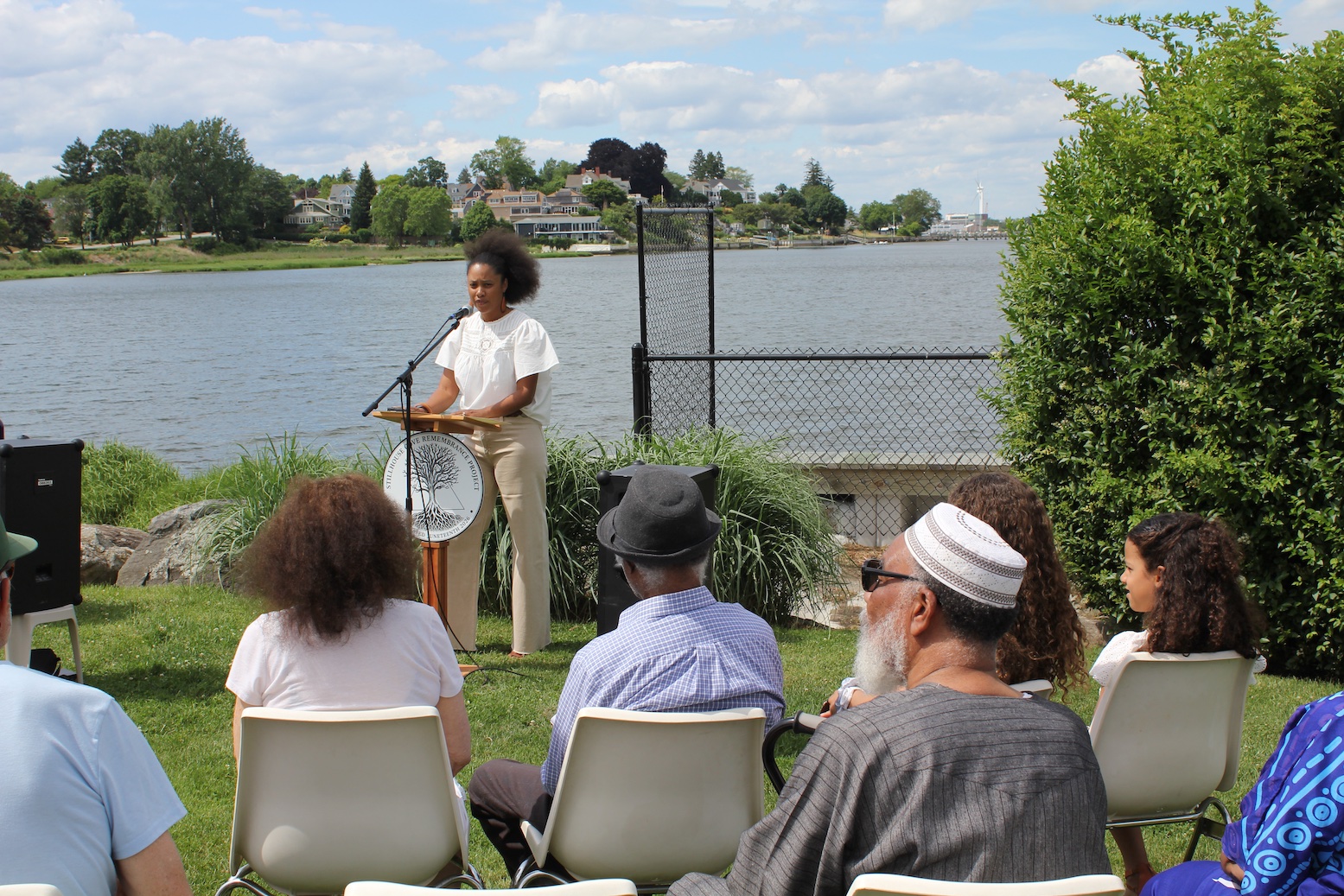
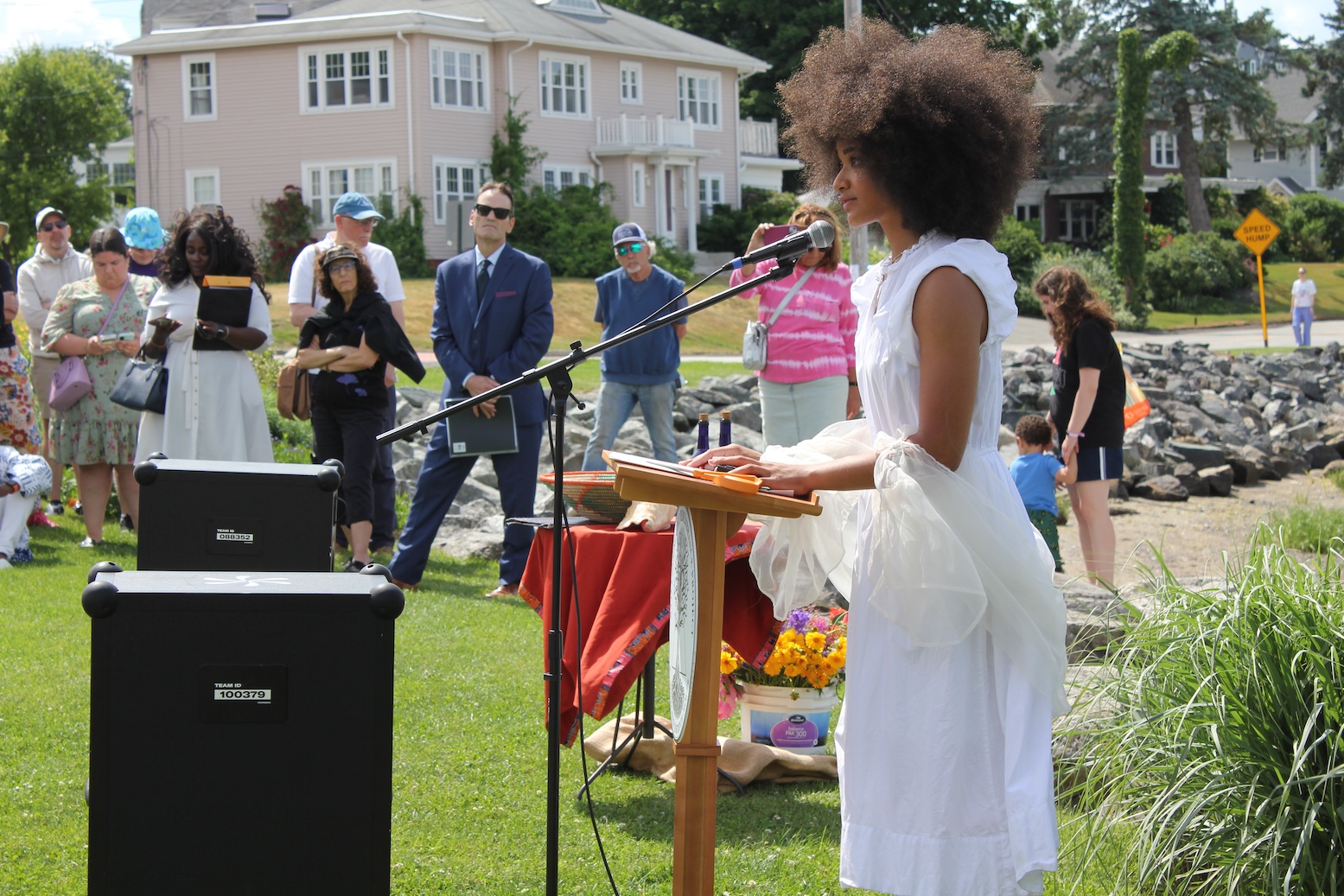
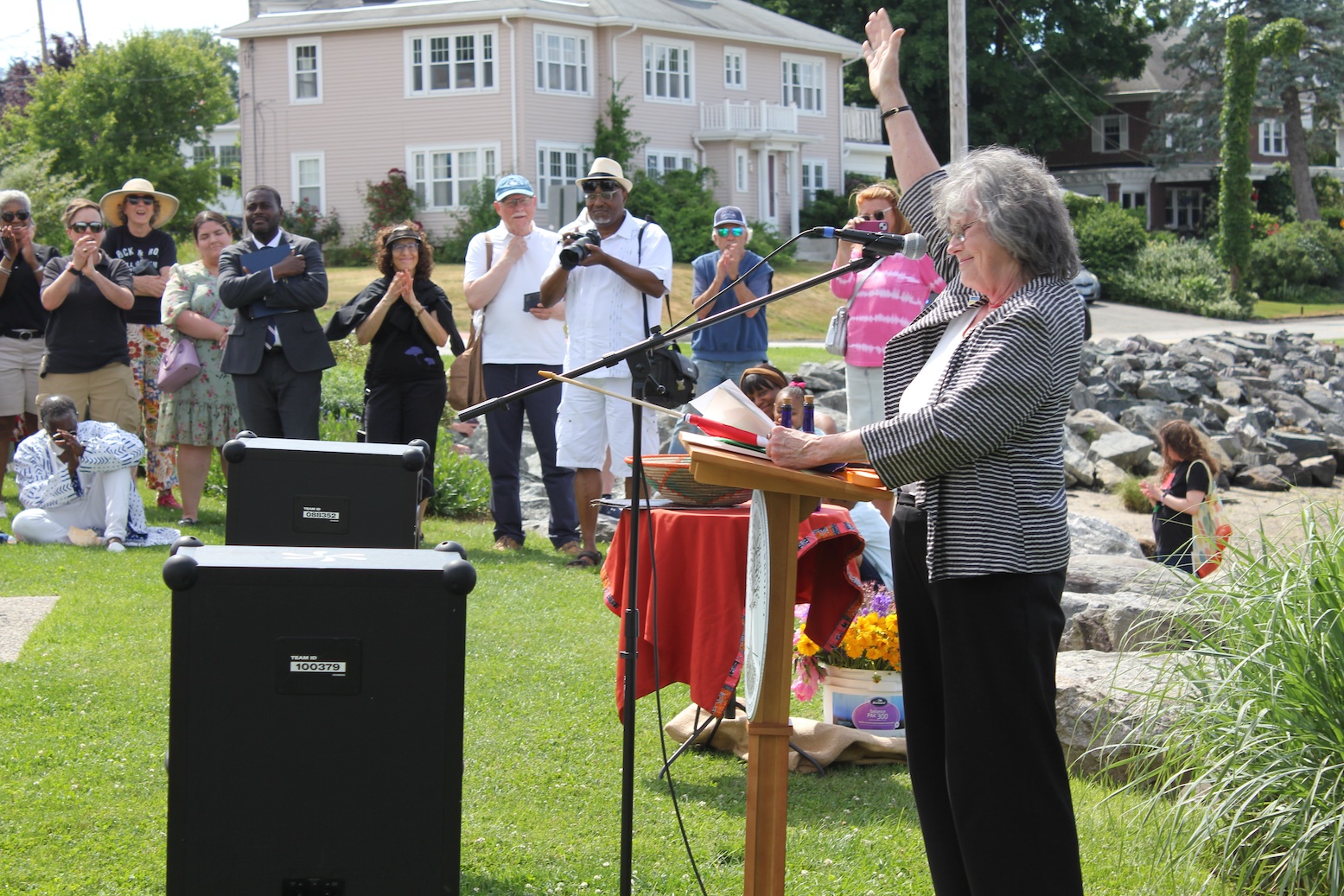
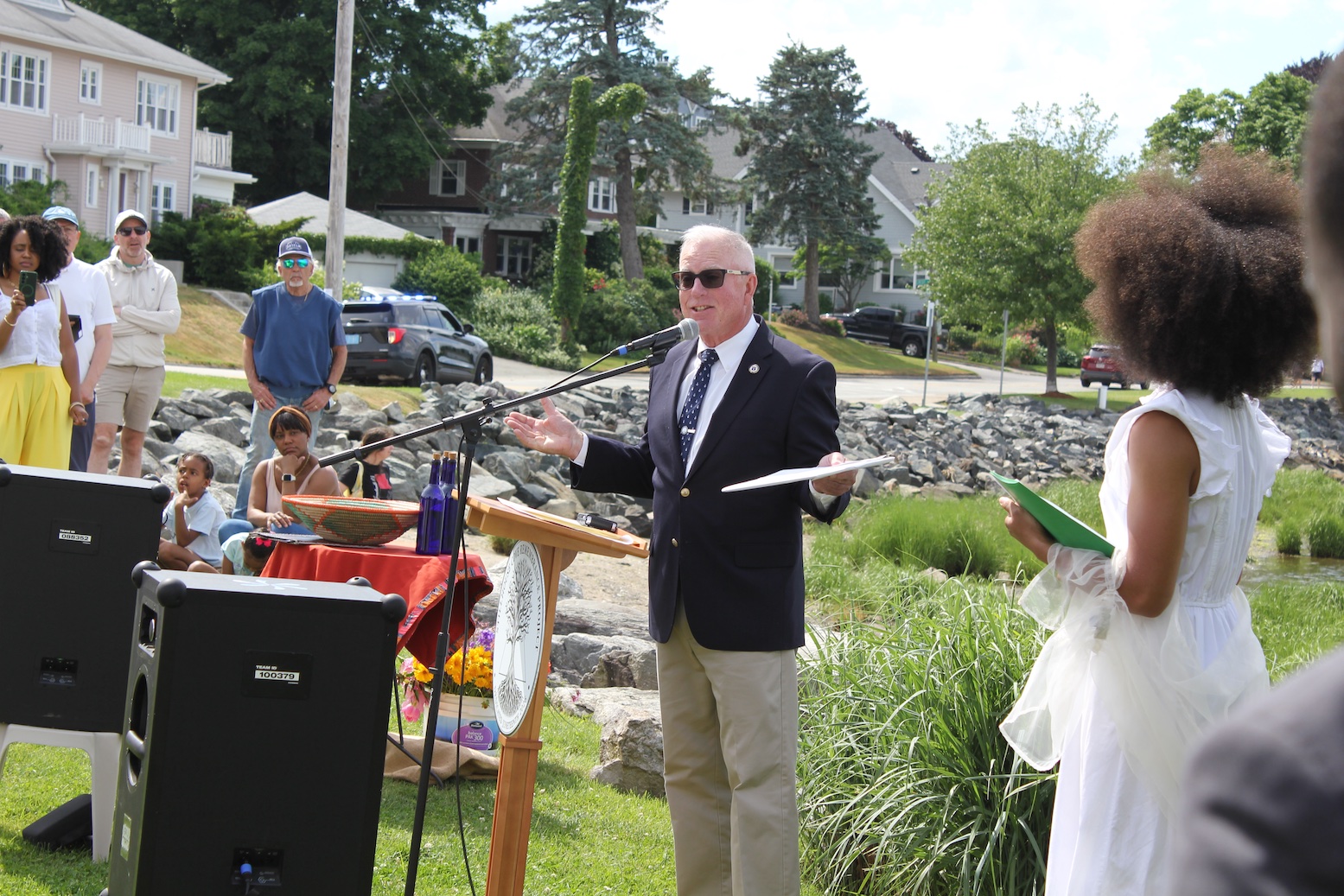
Tasuma Goodwin (SCRP) closed the ceremony with a very moving account. She is the owner of the last standing still house in Pawtuxet village on North Fair Street. As a descendant of slaves, she recounted the personal pain of living in a place that produced the liquid that was traded for her own forbearers. One room in the house was a blacksmith’s shop that probably produced rum barrel staves and the manacles used to bind recently free people during the Middle Passage.